The Ultimate Fargo Fall Lawn Care Checklist and Tips
Executing strategic fall lawn care tips is the single most effective way to help your Red River Valley turf recover from summer heat and build strong root systems before winter sets in. Learning how to take care of a lawn in the fall involves taking advantage of autumn’s warm soil and cooler air temperatures.
We’ve curated a dedicated fall lawn care checklist for Fargo-Moorhead residents to follow a structured seasonal timeline, focusing on soil aeration, overseeding, targeted weed control, deep-root fertilization, leaf management, and moisture retention, so you can guarantee a lush, green carpet come spring.
Table of Contents
Early Fall (September): Soil Recovery, Aeration, and Seeding
September brings relief from intense summer heat, creating the absolute best environment for cool-season grasses like Kentucky Bluegrass and Perennial Ryegrass to repair themselves.
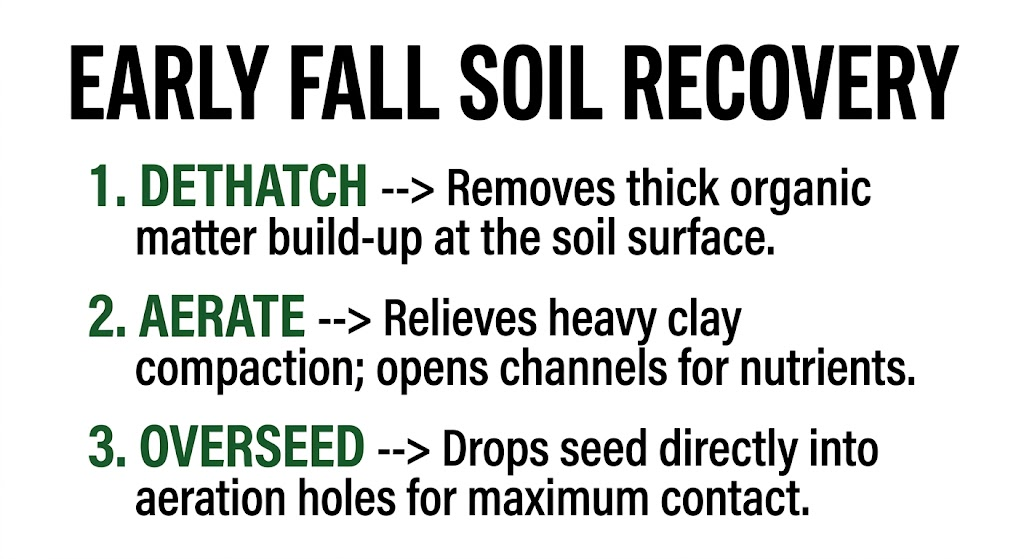
Lawn Aeration and Dethatching in the Fall
Summertime foot traffic combined with Fargo’s heavy Red River clay soil creates dense compaction. Scheduling lawn aeration in the fall pulls tiny soil cores out of your yard, allowing oxygen, water, and vital nutrients to penetrate directly to the root zone.
If your yard feels spongy or has a thick layer of dead grass stems blocking the soil line, pairing aeration with lawn dethatching clears out that barrier so your lawn can breathe freely.
Lawn Overseeding & Planting Trees and Plants in the Fall
Early September is the sweet spot for lawn overseeding in the fall. Dropping high-quality grass seed into newly aerated soil ensures rapid germination because the soil remains warm while cool evening temperatures prevent seedlings from drying out.
Landscaping Tip: Early fall is also the ideal window for planting trees and plants in the fall. Autumn’s natural rainfall and mild sunshine help young shrubs, perennials, and shade trees establish strong root systems without suffering heat stress.
Mid-Fall (October): Deep Feeding, Weed Control, and Leaf Removal
As daytime temperatures drop into the 50s, turfgrass shifts its energy focus away from leaf growth and toward deep root expansion and carbohydrate storage.
Lawn Fertilizer & Weed Control in the Fall
Applying a high-potassium lawn fertilizer in the fall provides the essential nutrients your grass needs to store energy throughout the winter months. Stronger roots mean early green-up next spring.
October is also the most crucial window for weed control in the fall. Perennial weeds like dandelions, clover, and thistle are actively drawing carbohydrates down into their root structures to survive winter. Applying targeted weed control during this phase forces the herbicide deep into the root system, killing the entire weed so it won’t return in May.
Fall Leaf Removal Tips: Mulch vs Bagging Leaves in the Fall
Managing autumn foliage is vital to keeping grass alive under snow. When considering mulch vs bagging leaves in the fall, keep these guidelines in mind:
- Mulching Leaves: A thin layer of fallen leaves can be chopped up with a sharp mower blade. The fine leaf particles break down naturally, adding valuable organic matter to the soil.
- Bagging & Removal: When leaves pile up heavily, mulching isn’t enough. Dense leaf blankets block sunlight, trap unwanted moisture, and create moldy microclimates that suffocate turf.
Applying smart fall leaf removal tips, like raking regularly or scheduling a professional clean-up before heavy frosts hit prevents matted leaves from smothering grass blades.
Late Fall (November): Final Mowing and Moisture Management
Before the ground freezes solid in the Red River Valley, two critical final maintenance steps remain while the weather is still snow-free.
Ideal Mowing Height for Fall
Throughout autumn, gradually lower your mower deck. The ideal mowing height for fall on your final two cuts of the season should be 2 to 2.5 inches.
- Why it matters: Leaving grass too tall allows winter winds to mat the blades down, creating ideal conditions for snow mold disease.
- Avoid scalping: Never cut off more than one-third of the blade length at a time. Lower the deck incrementally over your late-season cuts.
Watering Your Lawn in the Fall
Don’t turn off your watering routine prematurely. Grass roots remain active until the soil freezes hard. Proper watering your lawn in the fall ensures root systems are fully hydrated before winter desiccation sets in. Water deeply once a week during dry October and early November spells until night temperatures consistently drop below freezing.
Fargo-Moorhead Fall Lawn Care Checklist
This quick breakdown maps out essential seasonal steps to keep your lawn on track throughout autumn.
| Fall Phase | Primary Target | Key Lawn Action | Recommended Service |
| Early Fall (September) | Soil & Seed | Relieve clay soil compaction & fill bare spots | Yard Aeration, Dethatching, Overseeding |
| Mid-Fall (October) | Roots & Defense | Store root nutrients & eliminate perennial weeds | Yard Fertilizing, Weed Control, Leaf Clean-up |
| Late Fall (November) | Turf Structure | Lower blade height & hydrate soil before freeze | Final Mowing/Trimming, Deep Irrigation |
Professional Fall Lawn Care Services by Funk’s
Executing a full autumn maintenance plan takes time, commercial equipment, and local expertise. At Funk’s Lawn Care Service, we are locally owned and operated, proudly serving homeowners in Fargo, West Fargo, Moorhead, and surrounding areas with a strict focus on quality over quantity.
We take pride in doing the job right the first time through clear communication, reliable scheduling, and professional results.
Recommended Fall Lawn Care Services We Offer:
- Lawn Mowing & Trimming: Continuous cutting at precise seasonal heights, including gradual lowering for final late-fall trims.
- Lawn Aeration & Dethatching: Heavy-duty soil core extraction and thatch removal designed for Red River Valley clay.
- Lawn Overseeding: Premium seed blend application to thicken thinned lawns.
- Lawn Fertilizing: Specialized late-season root-building nutrient applications.
- Lawn Weed Control: Targeted broadleaf weed treatments to kill persistent roots before winter.
- Leaf & Debris Clean-up: Complete property leaf and foliage removal to protect turf health.
Give your lawn the autumn attention it deserves so it bounces back lush and green next spring.
Click here to request your free fall quote or schedule service with Funk’s Lawn Care Service today!